

As a ‘beginner’, I want to know: can I use ONLY plants? Although I am aware it will not bring me full light-fast colors, let me dive a bit deeper into dyeing without chemicals.
Dyeing non-chemical – natural does not make fully light-fast
All sorts of plants and flowers give color to fabrics, some also natural chemicals. Colors are more easily absorbed by wool and silk, less to cotton. I use mostly cotton nevertheless and learned not to expect bold colors. But I wonder: How did people centuries ago keep their dyed cloths light-fast? A quick research tells me: if you want to dye like they did; with no industrial alum, but with maximum durability, then focus. They didn’t waste time on turmeric, berries or most flowers. Centuries ago, people weren’t better at dyeing; they simply relied on the most stable dyes nature offers and avoided the fugitive ones.
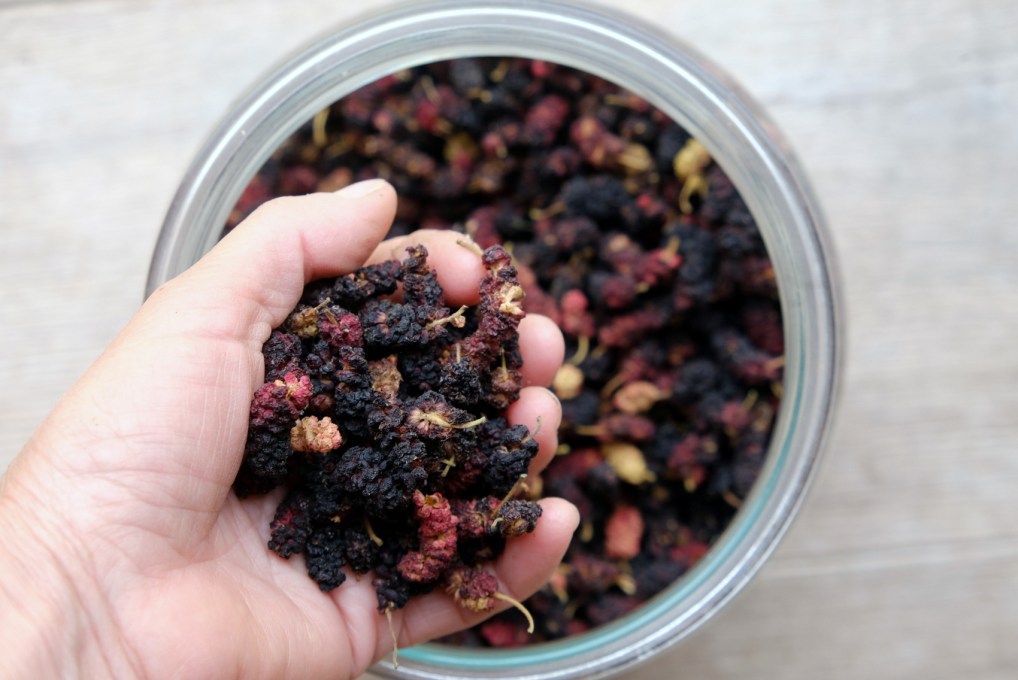
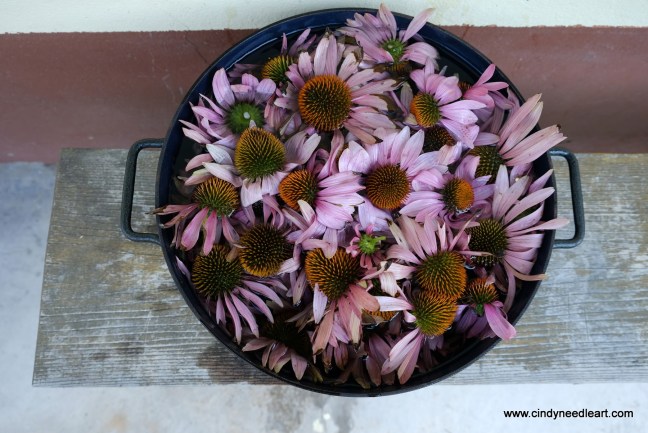
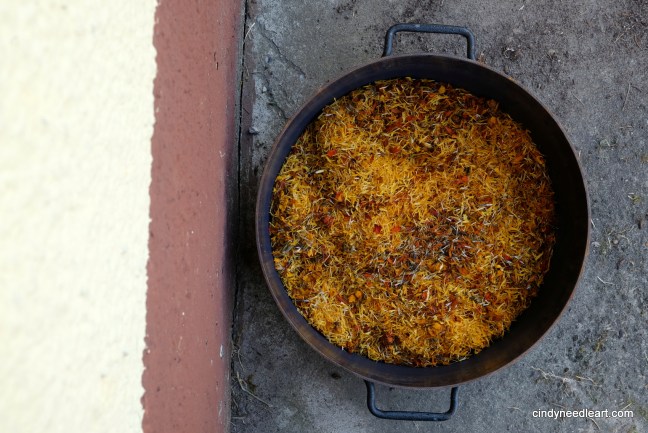
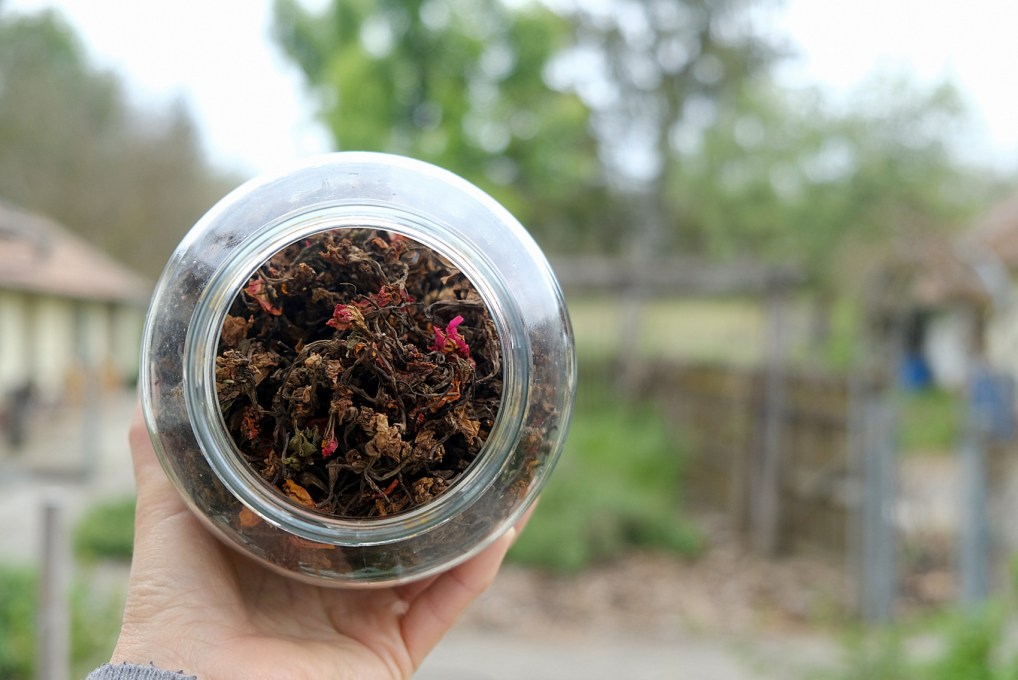
I like to try new colors, derived from cleaver roots, petals of mirabilis jalapa, tagetes, marigold , echinacea, sumac and so many other flowers, roots and nuts. I have more input than I choose to spend time on. Also, since it is just a hobby and I have a lot of other desires, it does not often come to long experimenting and trials. Usually I get turned on big time at the end of gardening season when plants bring their last round of flowers and I think: ‘it’s now or next year’. So, I collect a lot and try only ever so often. Centuries ago, someone was a housewife, a farmer or a dyer.
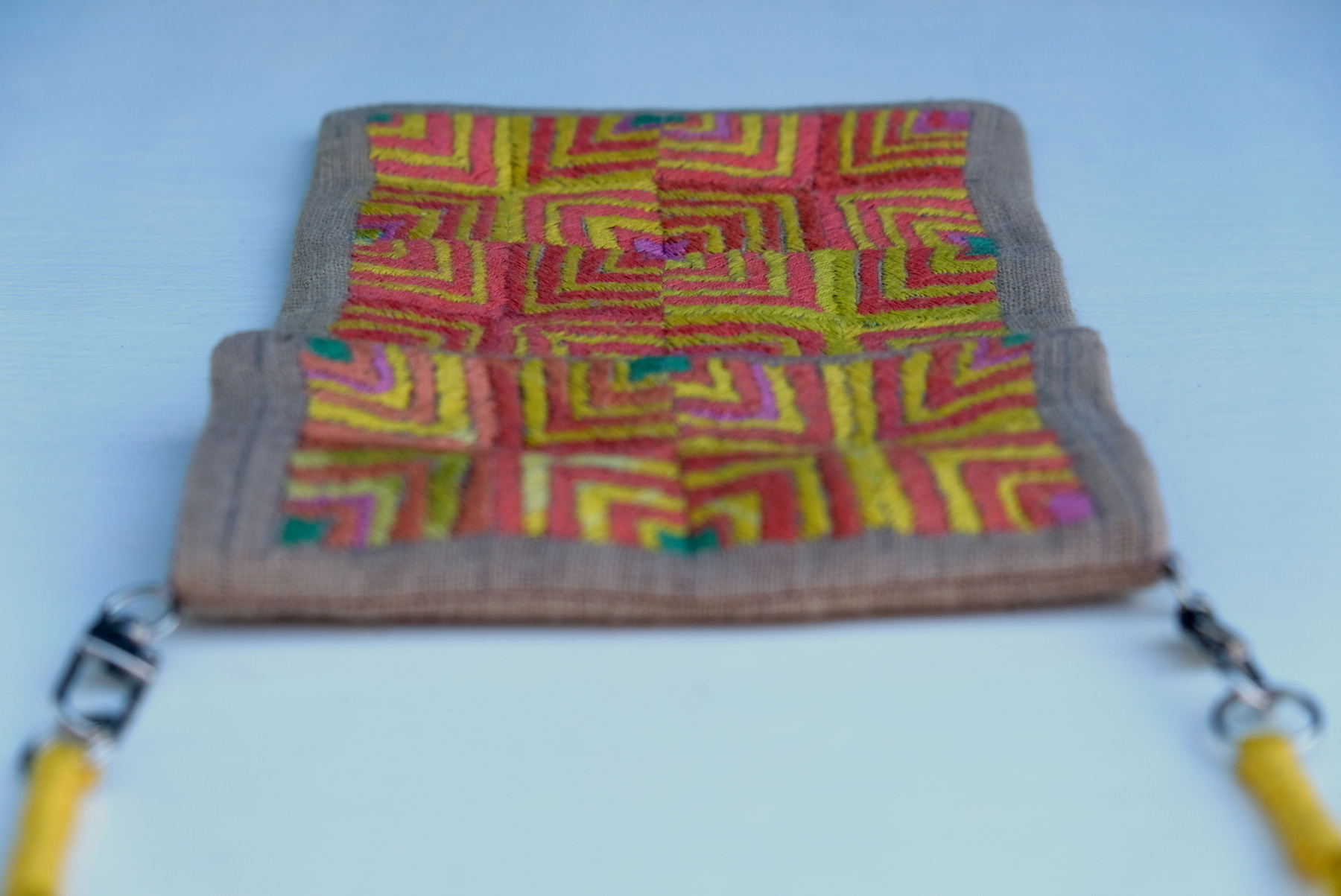
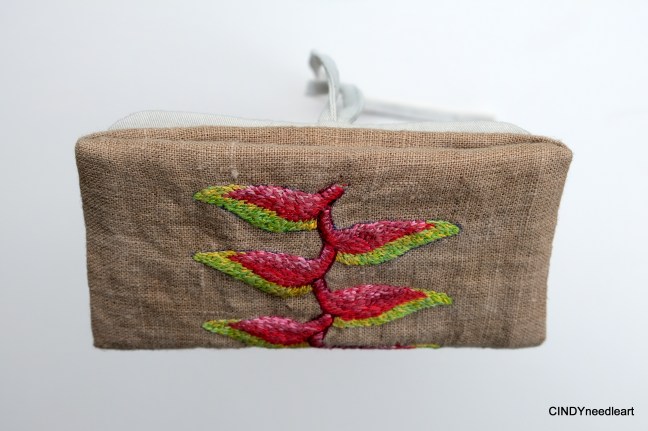
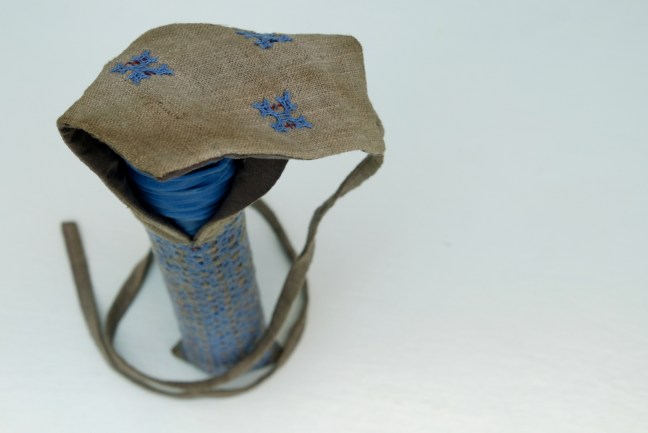
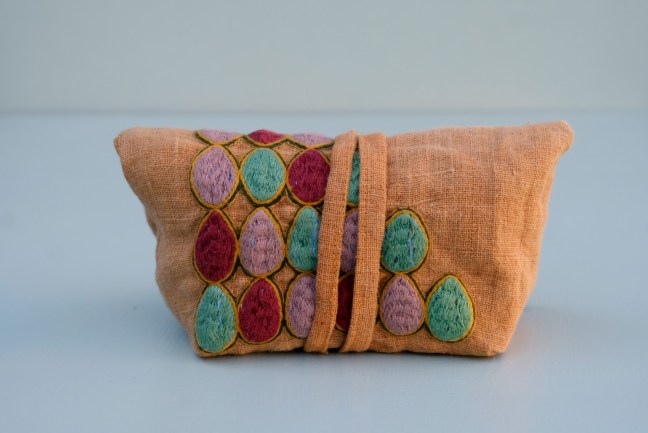
Back then, the dyer kept colors light-fast by choosing the right dyes, the right mordants, and the right living habits around cloth. I choose mulberry as dye, oak galls as tannin and aluminium acetate as mordant on pouch Tina & Ted.
Colors
Indigo and woad makes a deep blue. Madder makes reds. Weld makes the brightest, most light-fast natural yellow (I think goldenrod and dandelion do well too). These three colors are the main colors, and plants I do not have or have not yet identified.
1. Dyeing with natural material starts with using them fresh or dried, chopping them or using whole. When you dry them they loose weight and so they become more intense. I prefer to dry the natural material so I can use them when the moment of desire to dye arrives. A lot is needed to dye small pieces of fabric. I like to use 100 gram of fabric at most, and use at least 100 gram of dried material.
2. Chopping the material in small pieces makes it more of a hassle to strain and divide the liquids from the material, though I like the fact that fabrics have particles attached to them.
3. You can not do quick coloring of fabrics, it simply needs several steps to get to a color that also stays there. I am not interested in colors that wash out after one rinsing, neither am I in need for total light-fast fabrics. Without using chemicals one can not have a fully light-fast colored fabric.
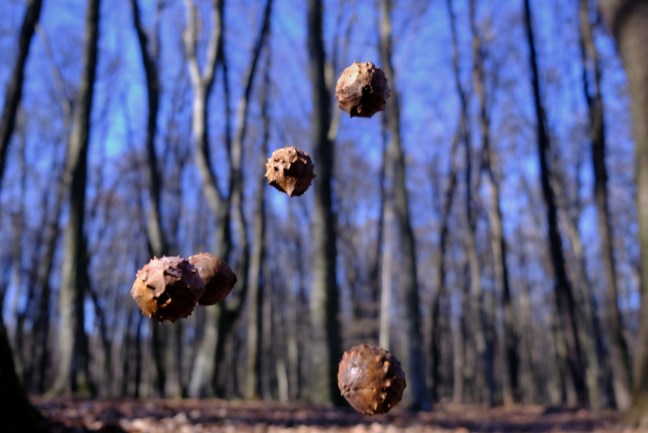

Pouch Alpujarra is dyed with chemicals (aluminium acetate) and mullein leaves that grow in my garden.
A tannin
Tannins are organic compounds found throughout many plants—especially in bark, wood, leaves, roots, fruits, and galls. They serve as a natural defence system, dissuade herbivores and pests.
Chemically allowing them to bind strongly to proteins and other organic molecules. This binding ability is what gives tannins their characteristic effect.
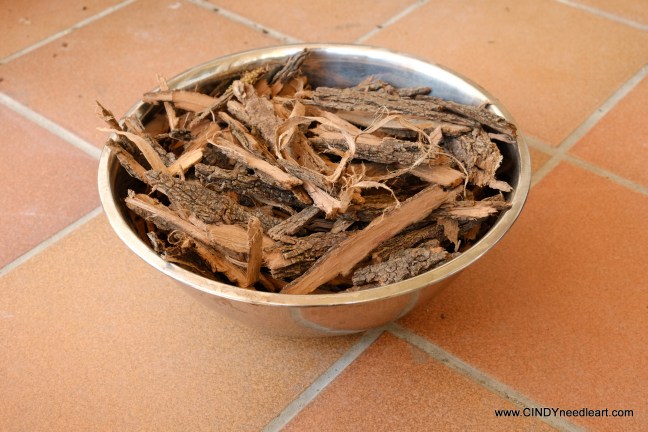
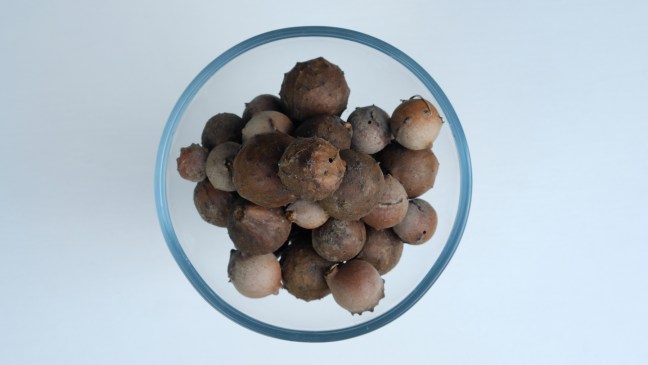
Cotton needs tannin and a mordant such as alum or aluminium acetate. Tannins are used to build an insoluble bond between the fibre, the dye and the mordant agent. I stick to natural tannins that I can find in nature, such as oak galls, sumac leaves or black walnut and pomegranate rinds. They do colour the fabric which is not always what you want. Yet their tannin dyes that barely fades.
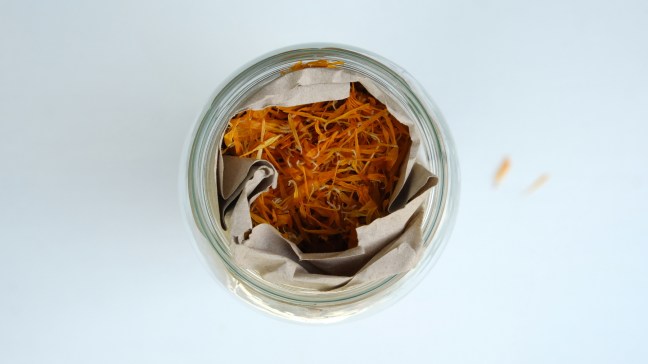
Left above: dyed with onion skin. Right above: dyed with elderberry. Left below: dyed with black tea. Right below: dyed with tagetes & calendula flowers
A mordant
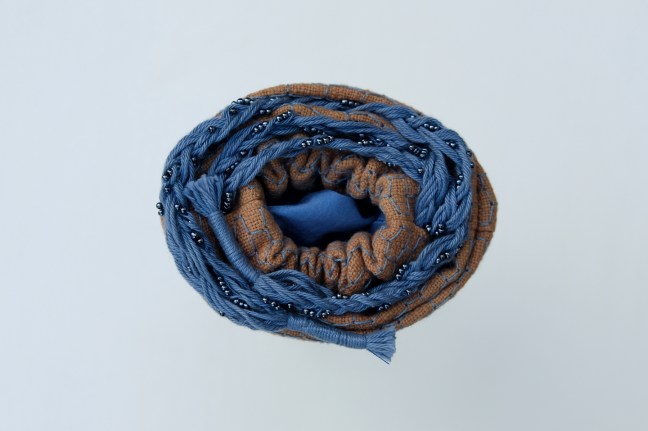
To have colors light-fast, a mordant needs to be used and that is not simply vinegar or salt. A mordant is a chemical binding agent that correspond with the fabric and the dye material. To achieve bright colors you need to mordant the fabric. I ordered chemicals online and now they’re finished I try to do without it. Since I could get my hands on copper I start experimenting.
I ordered chemicals aluminium acetate, alum and titanium oxalate from ‘Wildcolors’. The former two are finished, the latter is still to be practised. But how did they mordant centuries ago, I wonder? Turns out, they used metal mordants, especially alum and iron. Before industrial alum, people used alum from natural mineral deposits: iron from rusty nails, pots or earth pigments. Copper from bronze vessels, symplocos leaves (that contain natural alum, a tree found in parts of Asia). Furthermore they used tannin-rich plants as natural binders. These weren’t chemical-free, they were naturally occurring minerals.
Copper
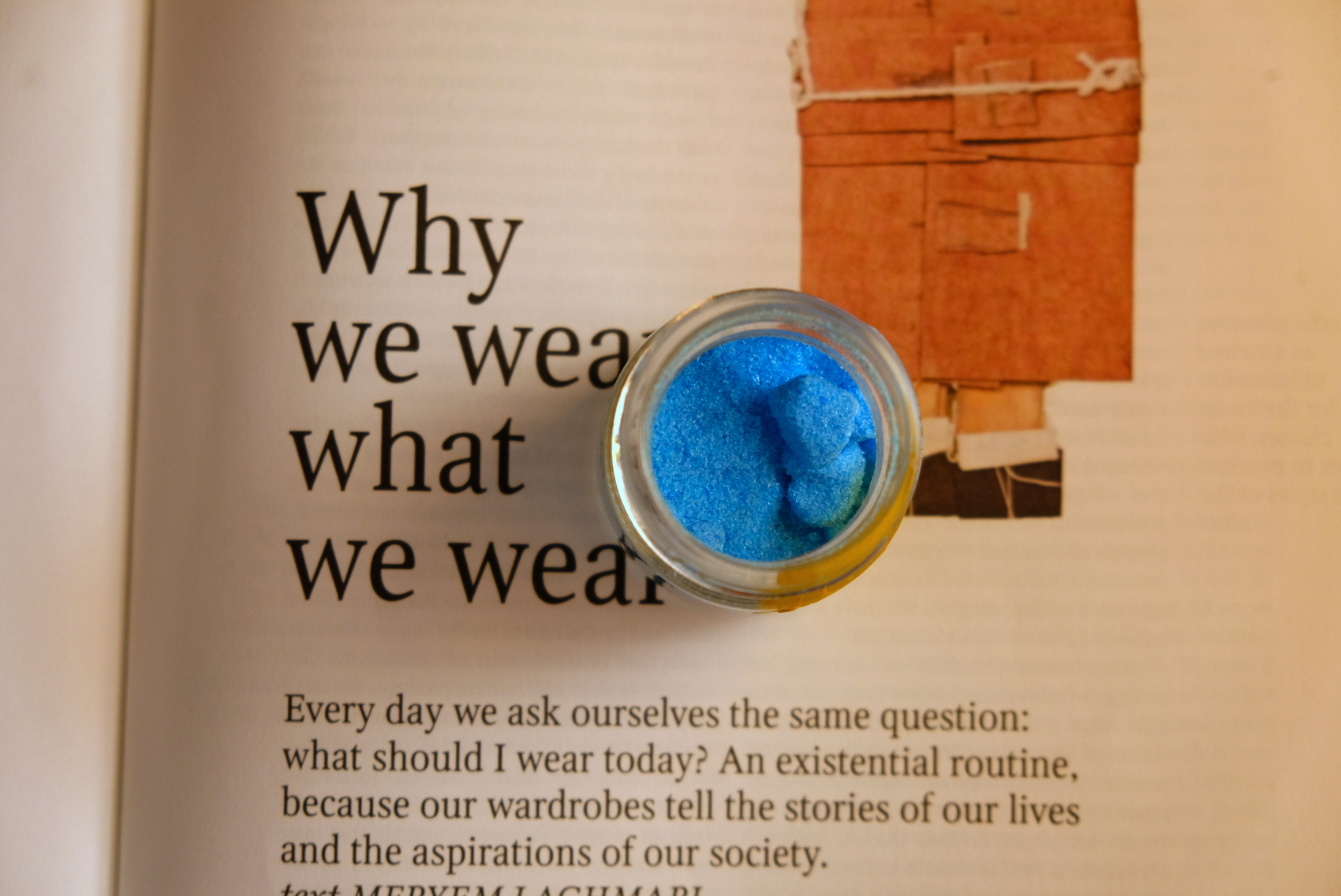
Dyeing with blue copper powder (bought at the garden centre) as a mordant is possible but not ideal. It also brittles the fabric when used too much. It is toxic so care must be taken when used. I try to stick to natural methods but wanted to try. Copper does improve light-fastness and deepens the colors, not brighten the natural colors you try to achieve.
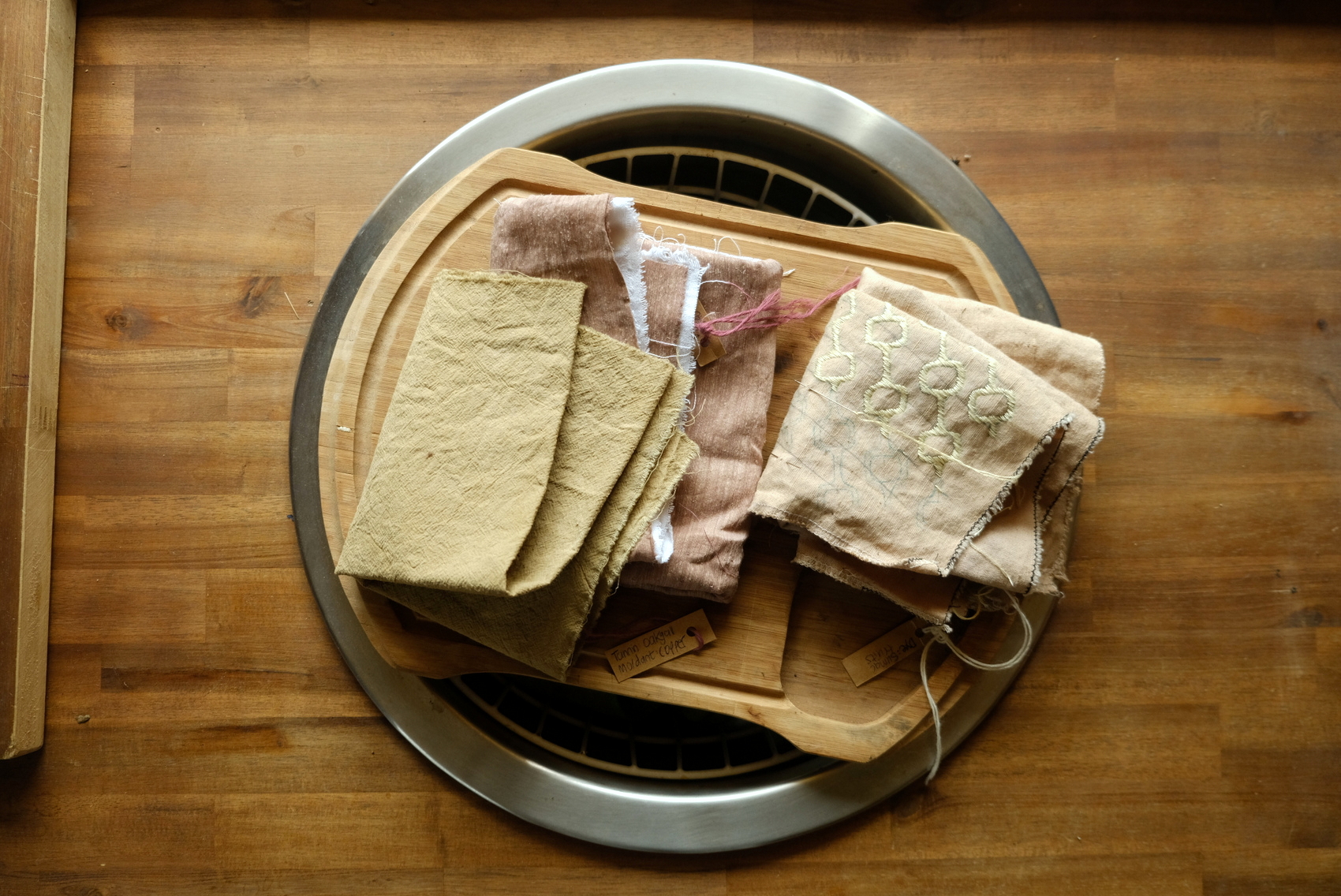
Centuries ago, the people who dyed their fabrics layered tannins under everything. Tannins were the secret weapon. A typical medieval or early-modern dye sequence:
1. tannin bath (oak galls, sumac, pomegranate)
2. alum or iron
3. dye
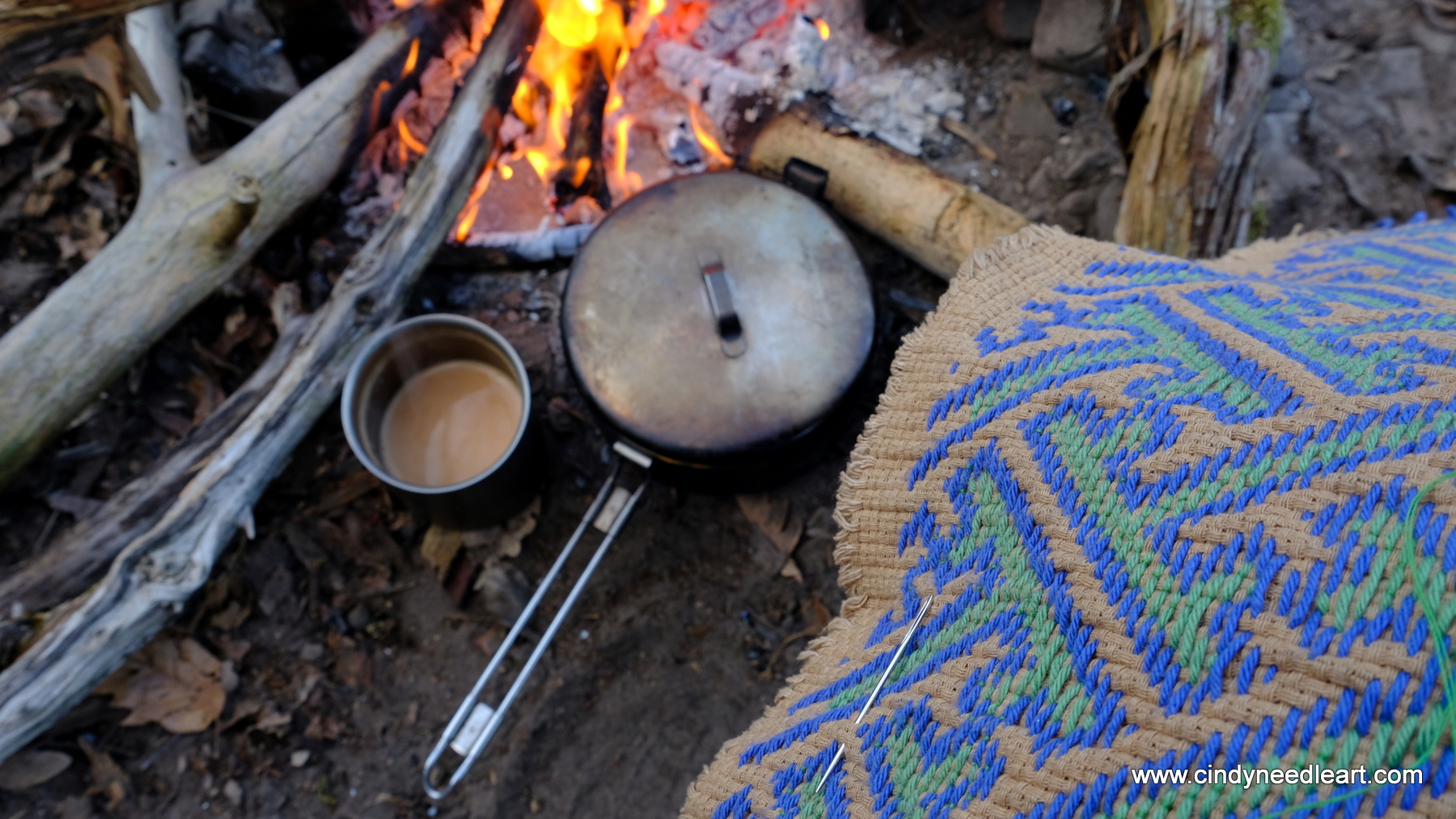
This created a strong, UV-resistant bond, especially on cellulose (cotton). My first trial, yerba mate on cotton with oak gall as a tannin and copper as a mordant, has yet to be embroidered and stitched into a pouch (picture above). Pouch Pag, below, is dyed with onion skin and the lining is dyed with goldenrod.
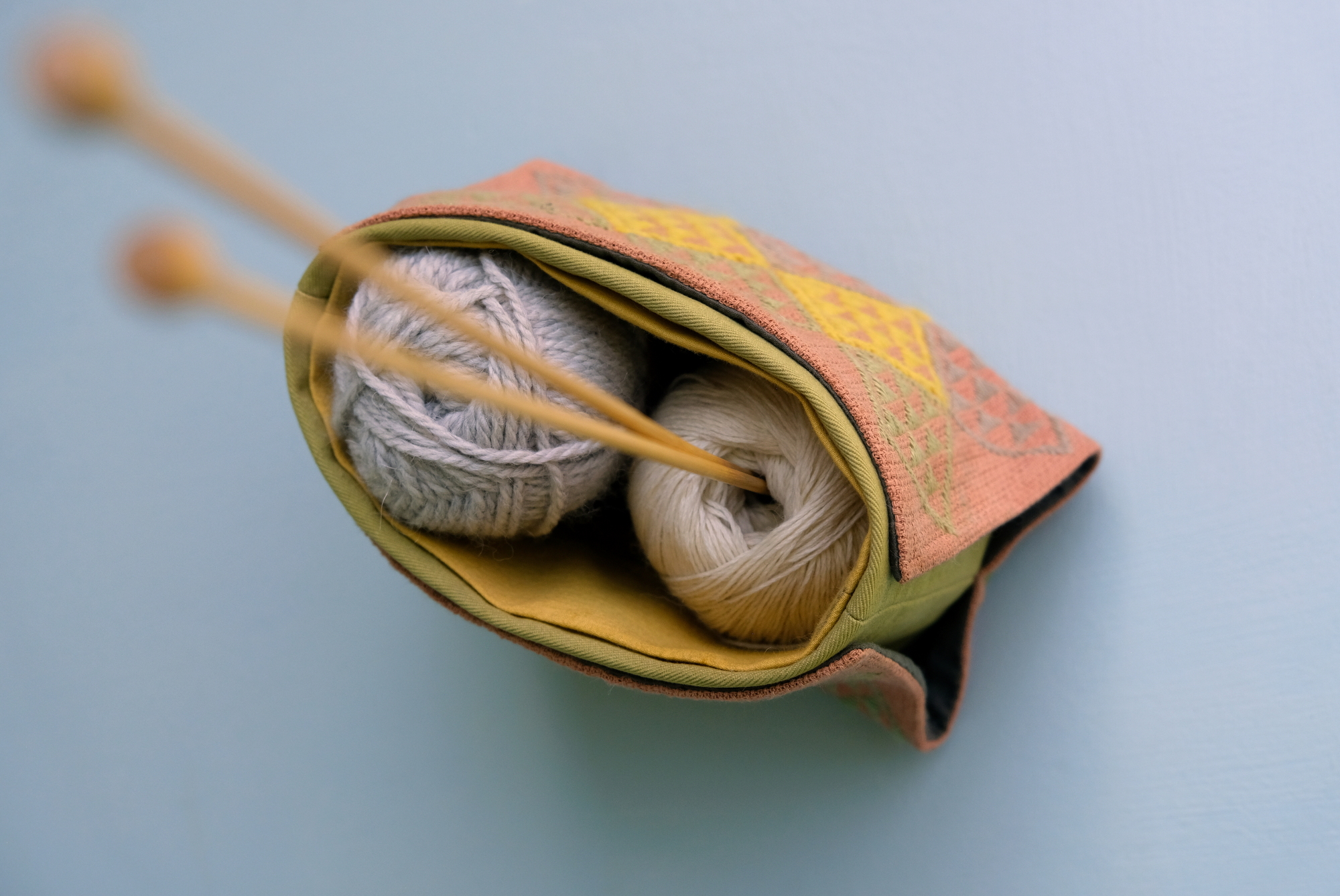
Dyeing cotton without copper/other bought chemicals
Cotton being cellulose (and linen and hemp too) you can dye without alum or aluminium acetate by using plant‑based mordants or protein‑rich pretreatments that help natural dyes bond to the fibre. These methods rely on materials that are foraged and thus often edible. A tannin bath acts as a natural primer. I prefer all-natural sources: pomegranate peel, oak galls, black walnut hulls, tea, sumac leaves. I have no access to madder, weld and indigo, not to chitosan. Symplocos is a plant that grows in tropical climates and contains naturally alum, needless to say this doesn’t grow where I live. Pouch Riogordo is dyed with carob pods.
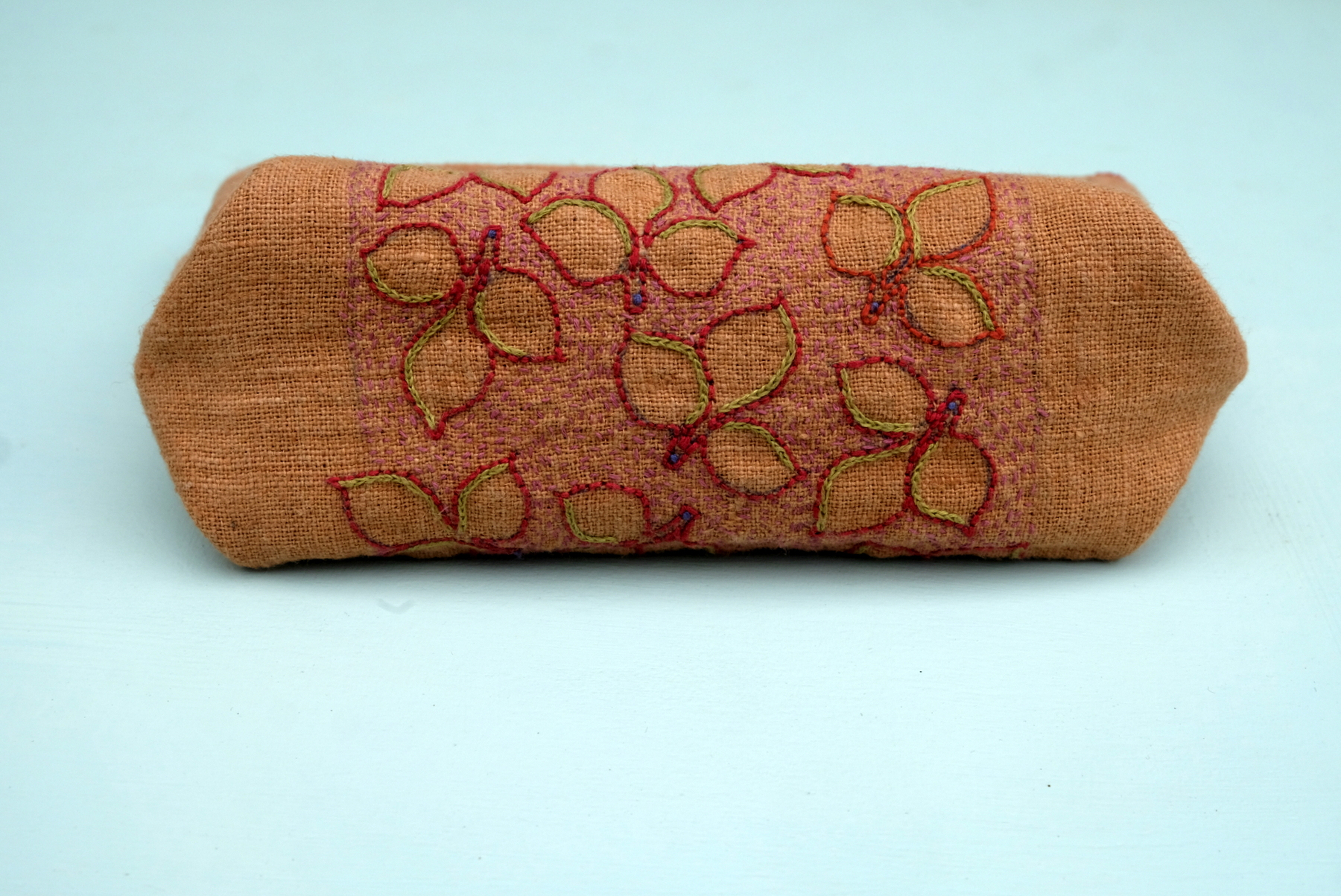
Natural only
My goal is: light-fastness, no alum, no harsh chemicals, then the best method seems to me:
1. tannin pre‑mordant (oak galls, pomegranate peel, black walnut)
2. natural light fast-dye (black walnut, onion skin, goldenrod seem to be the best. I have no woad, indigo, madder and welt.)
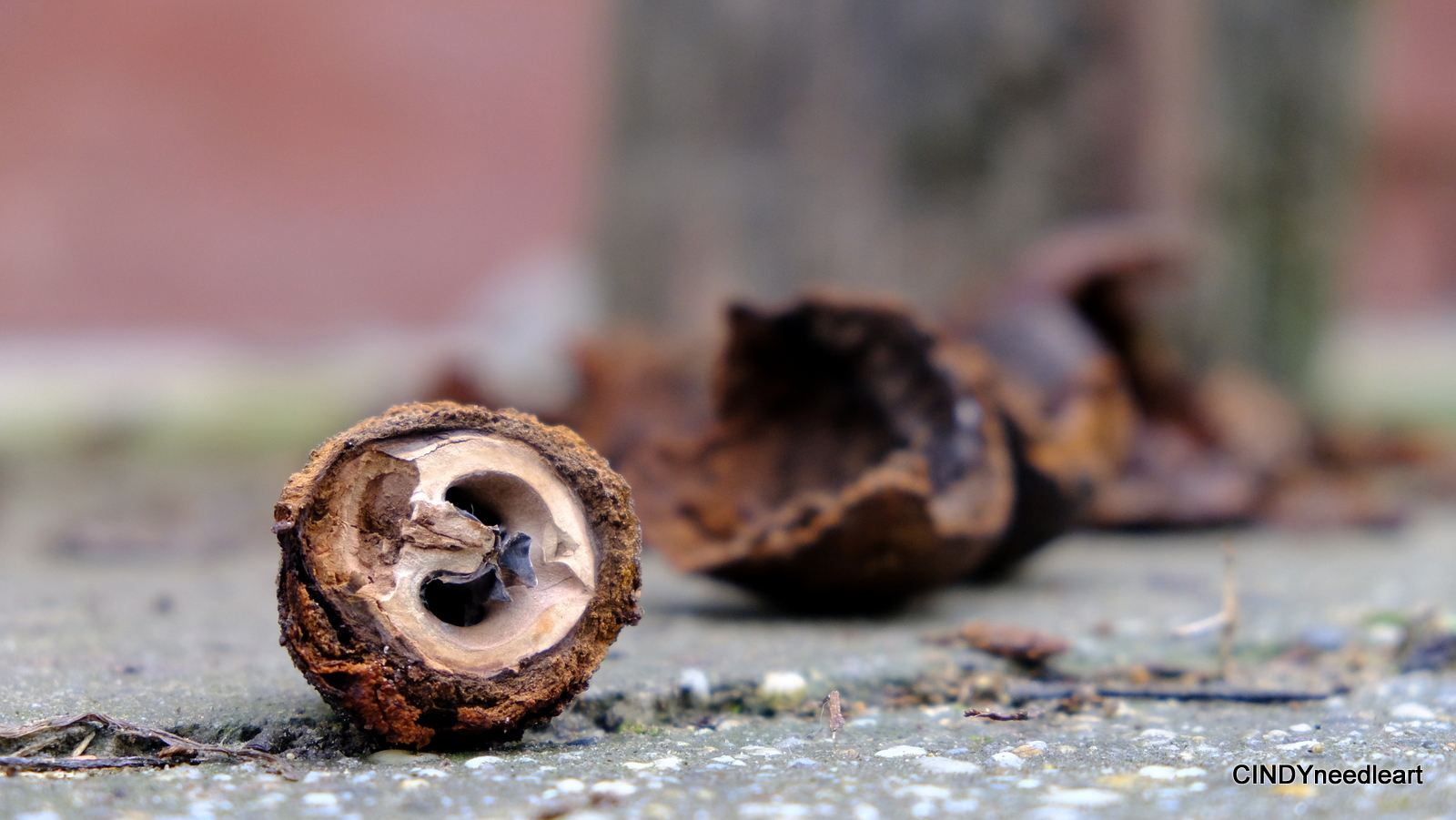
Naturally light-fast dyes are those whose colorants are inherently stable under UV light. This is why dyes like madder, weld, walnut, and indigo have been used for centuries in textiles that needed to withstand sun exposure. However, they improve light-fastness, but never are fully by themselves.
Conclusion: since my pouches don’t need much washing I don’t need the fabric to be fully light-fast. I want the fabric to hold it’s colour and I want it to be natural. However, this is not fully light-fast. One needs chemicals for this. Until I can get my hands on alum or aluminium acetate, I keep on experimenting.
Further conclusion: I would like to have alum and aluminium acetate but I don’t know where to buy it (without costly online orders)?
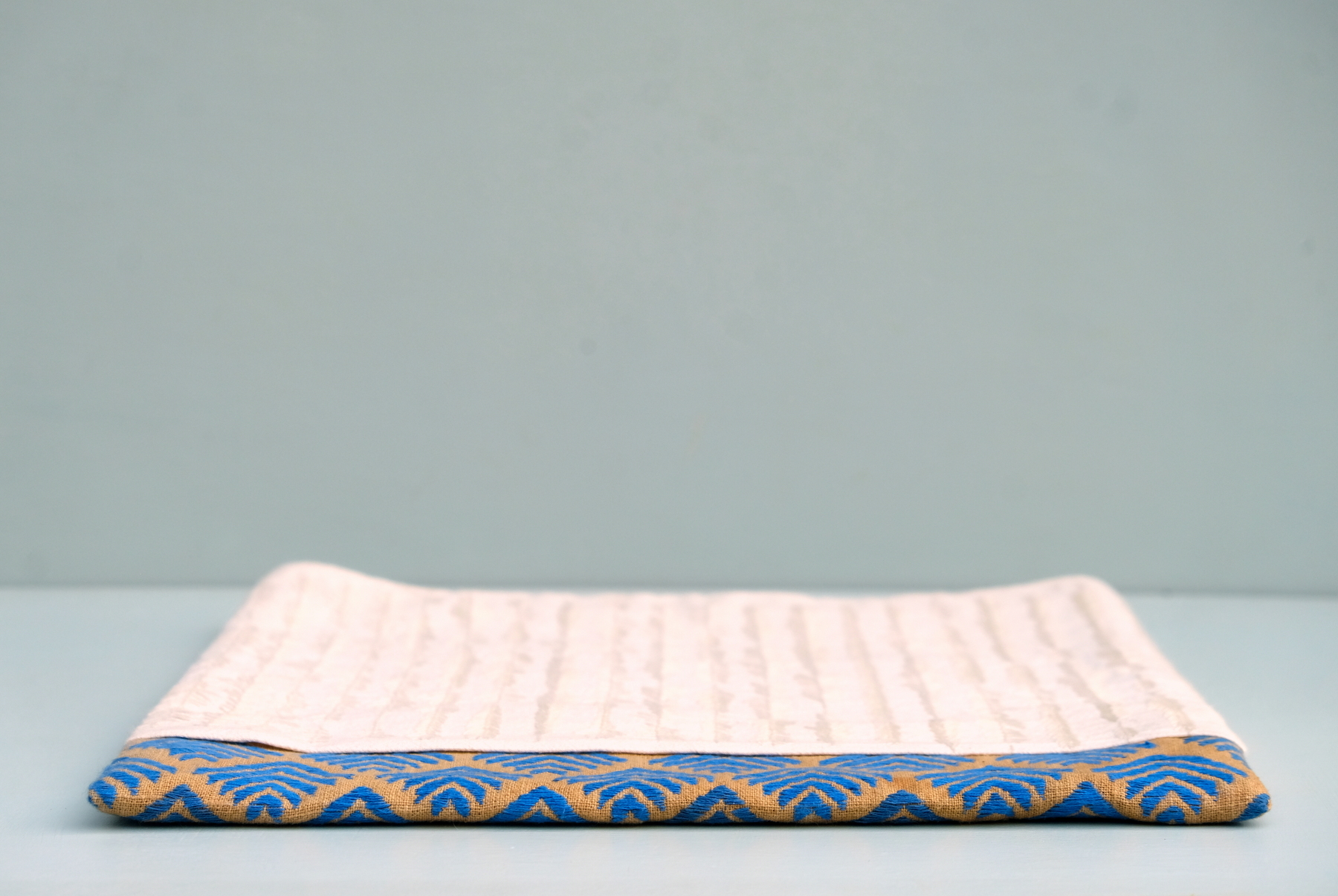
I tried a mixture of all I had left: hawthorn berries, red beet powder & calendula flowers.
